05 — WORK
DECISIONS WE MADE BETTERA selection of our thinking and work from the past twelve months. Select a row to expand the full account.
OWNED GROUND
LIVE A topic worth owning, built to compound
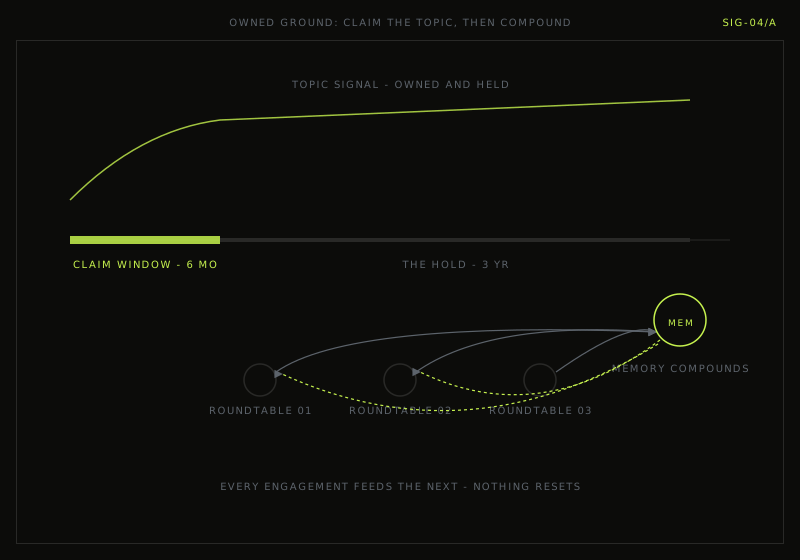
A bank set out to own a topic — six months to claim it, a three-year window to hold. With a think-tank partner we built the strategy, and ran it in simulation before the first roundtable convened.
6moTo claim the topic3yrThe window to hold →The stake
The bank had chosen its ground: a topic with roughly a three-year life, and a six-month window to claim it before someone else did. The risk wasn't the spend — it was arriving second, or pouring years of roundtables and content into territory where nothing accumulated between events. A topic on a clock punishes slow starts twice: late to own it, and less of it left to own.
How we made it better
The timing came first: how fast the topic was moving, and how long its signal would hold, set the tempo for everything after. We partnered with a specialist think tank to devise the ownership strategy, then ran it through our systems in simulation — testing how the programme would integrate before it launched. At its core, an intelligence-compounding loop: every client engagement feeds back into the system, so each roundtable and podcast starts from everything the last one learned. We designed the content strategy, the delivery formats, and the instrument layer that made every interaction feed the next.
Where it stands
- Strategy built with a specialist think-tank partner
- Simulation run before launch
- Programme live — each engagement feeding the system
PARTNERSHIP
LIVE A new-region launch, partnered beyond the obvious
Contracted to find the partnerships that could carry a launch into a new region — and the events to anchor them. Simulation tested the strategies; the algorithms surfaced opportunities the field hadn't considered.
1New-market launchLabInstrument fielded →The stake
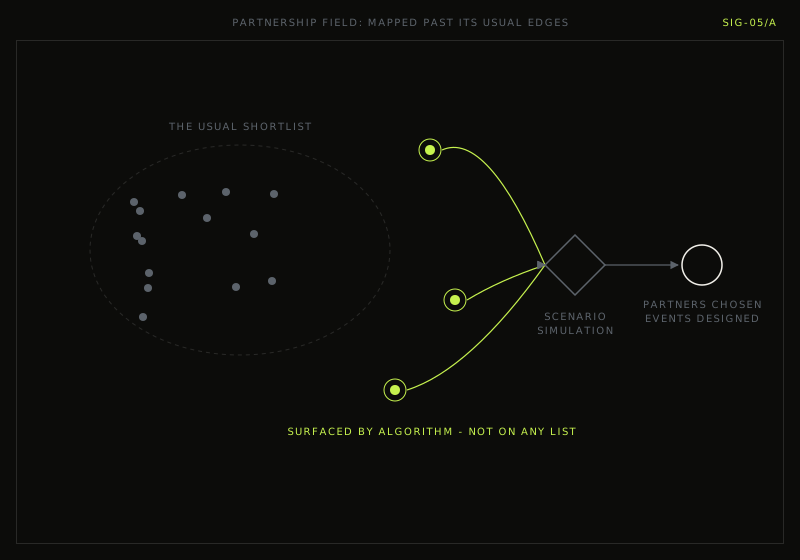
Entering a new region, the launch strategy would stand on its partnerships — and the obvious candidates were the ones every competitor courts. Choose from the same shortlist as everyone else and the launch arrives generic; the edge was in the partnerships nobody had listed.
How we made it better
We mapped the partnership landscape well past its usual edges, ran the candidate strategies through our systems — simulating how each would play out across scenarios — and put our algorithms to work on the field itself, surfacing opportunities not previously considered. Around the strongest, we designed the events that would make each partnership publicly visible, and examined how each would actually run.
Where it stands
- Partnership field mapped past its usual edges
- Candidate strategies simulated across scenarios
- Engagement live
RESEARCH
LIVE A research operation, pointed at its unfair advantage
A research organisation asked us to uncover and streamline how its work flows — and where its advantage is genuinely unfair. Structure, people and field assessed; every topic scored before an analyst commits.
ScoredSlate of opportunitiesAllAnalysts aligned →The stake
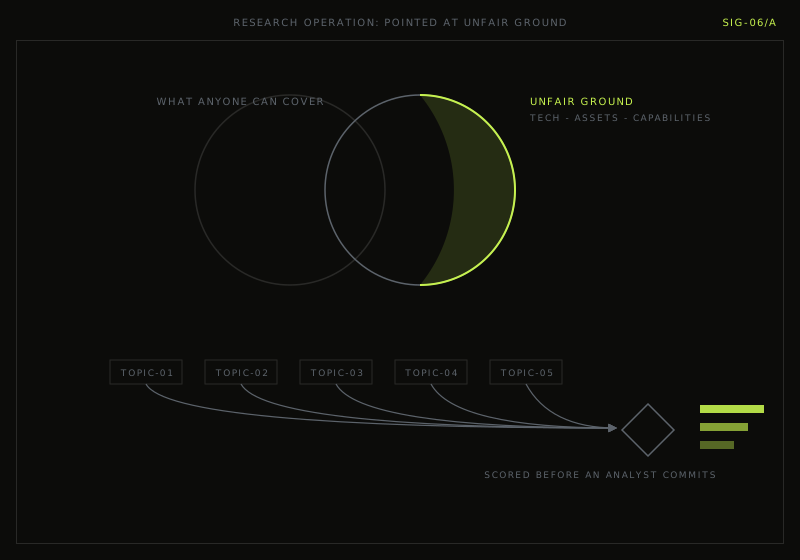
The organisation's research effort was spread across ground anyone could cover. Its real advantage lay wherever it alone held the technology, assets and capabilities — but without that map, every topic choice was a guess, and every analyst pulled in a private direction. Research that isn't pointed at its unfair advantage competes everywhere and owns nothing.
How we made it better
We started with the organisation itself — structure, the people in it, what it was actually trying to do, and how far that aligned with the voices of the community it serves. We mapped the competitive field against it, finding the ground where its advantage was unfair: territory to take new, and leads worth pressing. Then the pipeline: candidate research topics ran through our systems — checking alignment would hold across every analyst, surfacing where a topic would force compromise — and came out as a scored slate of opportunities for the organisation to choose from.
Where it stands
- Organisation mapped — structure, people, objectives, community alignment
- Unfair-advantage ground identified against the competitive field
- Topic pipeline live — every candidate scored before an analyst commits
SIGNAL
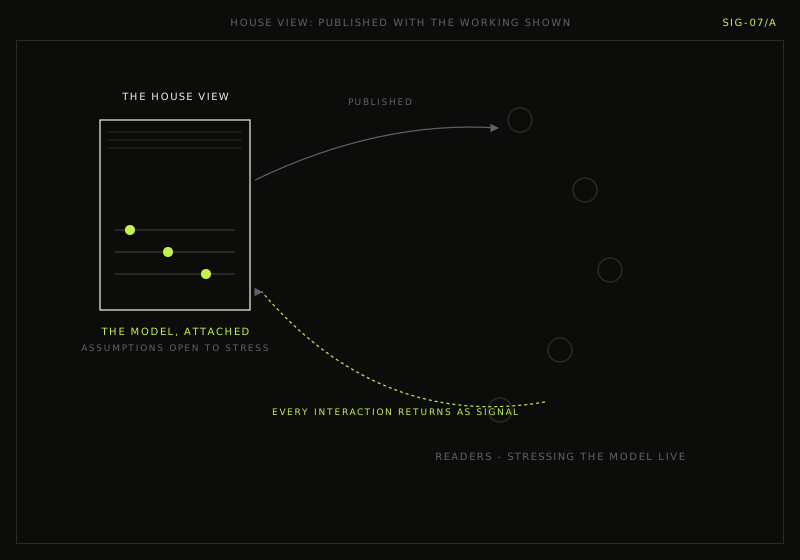
LIVE A house view, published with the working shown
A bank's research arm wanted its content to listen, not just broadcast. We built the strategy — and the capability for every piece to carry its model, open for readers to stress.
EveryPiece ships its modelLiveReader signal returned →The stake
Research publishing runs one way: the house view goes out, and nothing comes back. The models behind each view stayed private, the reasoning invisible, and every reader reaction — agreement, doubt, where they'd push — evaporated on contact. The organisation wanted the opposite: content as a listening engine, every publication returning signal to sharpen the models that made it.
How we made it better
We devised the strategy and built the capabilities to carry it. Every piece of research ships with simple interactive elements — and with the model itself: the assumptions and calculations the author used to reach the house view, published alongside it. Readers can stress and flex that model and watch the impact live. And every interaction returns as signal — what readers test, where they push hardest, what they don't believe — feeding straight back into the models. The content stopped broadcasting and started listening.
Where it stands
- Strategy devised; publishing capability built
- Models published alongside the house views they produce
- Reader signal flowing back into the models
EVENTS
LIVE A global series, processed into deliverables
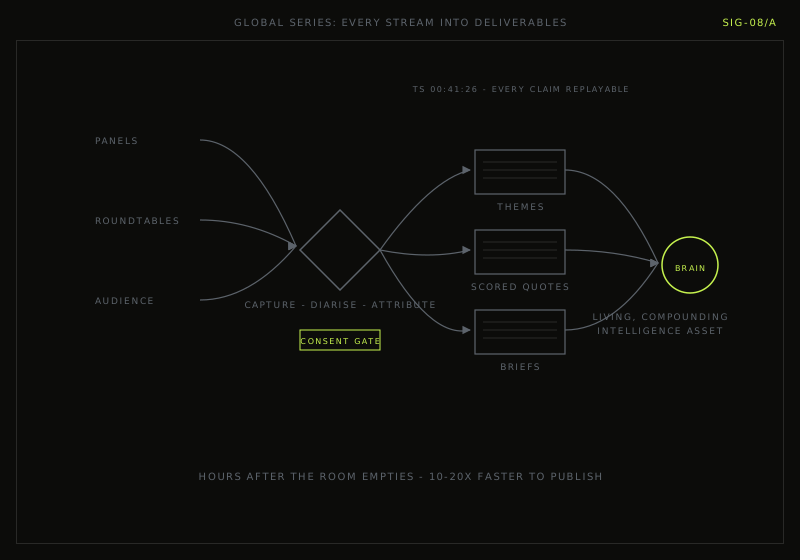
A global series of events — panels, roundtables and audience discussions around live research — every stream captured, attributed, and processed into deliverable-ready intelligence.
10–20×Faster to publishHoursNot weeks →The stake
A global programme of events generates enormous unstructured signal — sessions, panels, audience feedback arriving through every interactive channel — and most of it evaporates before it becomes anything. Extracting what was said, by whom, with what authority and intent, is the expensive bottleneck; at series scale the loss compounds, event after event, until the programme's best material lies in a drawer of recordings.
How we made it better
Every stream is captured, diarised and attributed against participant records — with consent enforced at the analysis layer, not by editorial discipline. From each event the system produces themes, remarkability-scored quotes, exit questions and briefs, each tied to a timestamped utterance that can be replayed against the recording. And every output feeds back into a living brain of the organisation — its research, its events, its audience — so the asset compounds instead of expiring. The brain belongs to the organisation, not to us — it compounds inside their boundary, and leaves with them if they do.
Where it stands
- Global series live — panels, roundtables and audience channels in one pipeline
- Consent enforced by the platform, not by discipline
- Every event feeding a living, compounding intelligence asset
MEMORY
LIVE An event series that never starts from zero
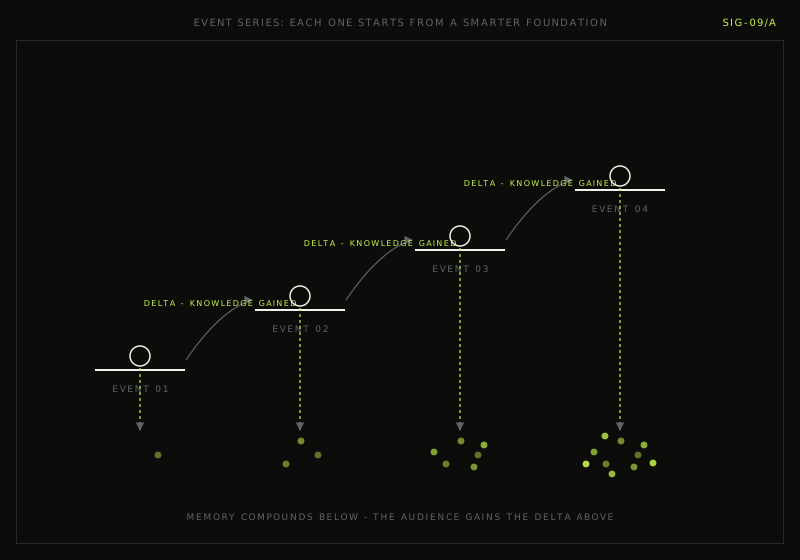
Every event feeds a living graph of entities, themes and who said what — so the series compounds what it knows, and its owner keeps the learning.
ZeroCold startsEvery eventFeeds the memory →The stake
Most event tools treat every event as an island. The third time a topic surfaces across a series, it's a fresh lookup — nothing accumulates, and the series owner pays for the same desk research again and again. A programme that doesn't remember can't compound.
How we made it better
Every meaningful entity and theme is extracted, deduplicated against what the series already knows, enriched with external research — sources kept for audit — and persisted as institutional memory. So each event starts from a smarter foundation: what's been covered, what's already known, which roads are worth pushing further down. That learning shapes every follow-up — so each event hands its audience the greatest possible delta in knowledge for being in the room.
Where it stands
- Entities and themes deduplicated across the series
- External research backfilled, with sources kept for audit
- Value compounding with every event added
- Memory owned by the series owner — the learning is theirs to keep
DELIVERABLES
LIVE Deliverables that carry their own evidence
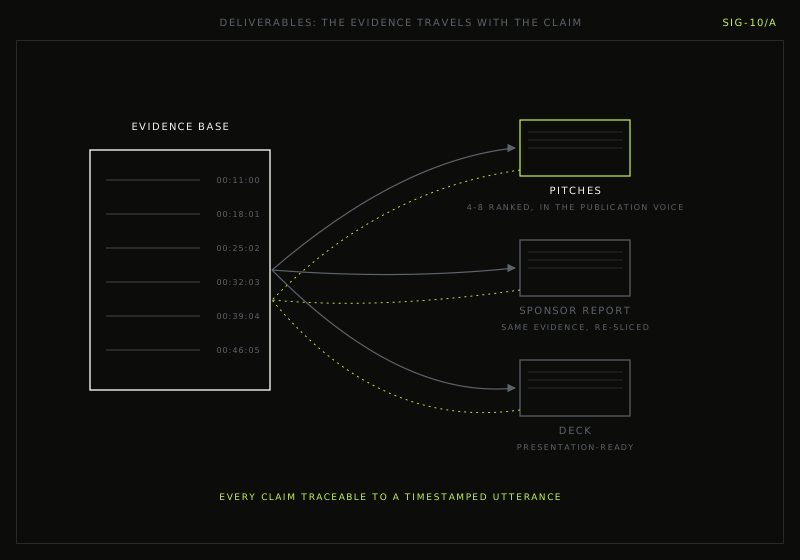
Extracted intelligence, shaped into actionable deliverables — pitches, reports and decks, every claim traceable back to the moment it was said.
4–8Pitches per profile1 clickPitch to brief →The stake
Intelligence that stays in a transcript is worthless to anyone on a deadline. The gap between what the room said and what can actually be published — for this audience, in this voice, with this evidence — is where most event value dies, and where unsupported claims slip through.
How we made it better
The extracted intelligence is shaped into ranked article pitches written through the lens of a named publication, sponsor reports, and presentation-ready decks — all driven from the same evidence base. Each deliverable arrives with its working attached: the quotes, the consent level of every speaker, and the timestamps behind every claim. The same intelligence re-targets to a second publication or sponsor without re-recording anything.
Where it stands
- Pitches generated in the target publication's own voice
- Reports and decks driven from the same evidence base
- Every claim traceable to a timestamped utterance
PROCUREMENT
LIVE Procurement, rebuilt as an intelligence layer
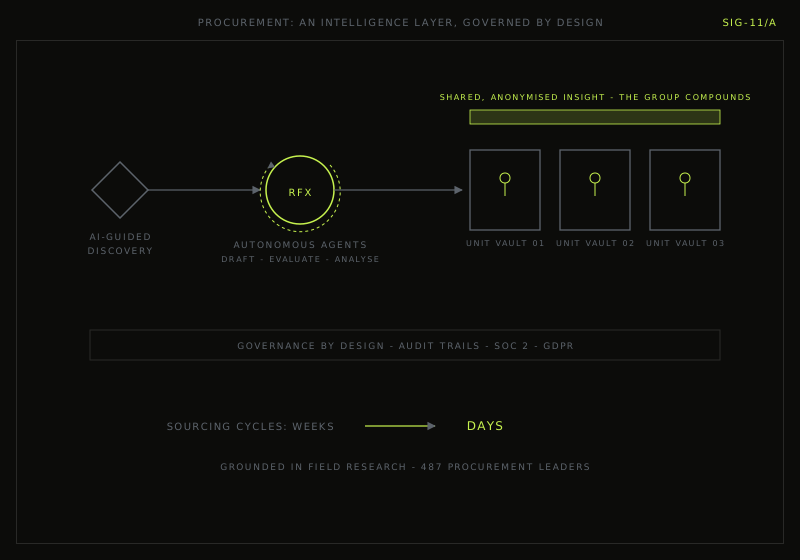
We built an AI procurement platform end to end — discovery to governance, autonomous agents drafting the RFx, and a knowledge layer that compounds with every sourcing event.
DaysFrom weeks, per cycle487Leaders in our field research →The stake
Procurement still runs on email and spreadsheets — in our own field research, 92% of teams manage at least one stage of every RFx manually. Cycles take weeks, nothing learned in one sourcing event survives to the next, and in the enterprise the problem multiplies: fragmented systems, data silos, and business units that can't share intelligence without breaking compliance.
How we made it better
We designed and built the platform whole: AI-guided discovery that captures what's actually needed before a single supplier is contacted; autonomous agents that draft, evaluate and analyse sourcing events; segregated data vaults with shared, anonymised insight — each unit keeps its privacy while the group compounds intelligence; and governance by design, with audit trails and SOC 2 / GDPR compliance built in, not bolted on. We grounded it in our own research: a field study of 487 procurement leaders on how sourcing actually works today.
Where it stands
- Platform live — from growing businesses to multi-entity enterprise
- Sourcing cycles cut from weeks to days
- Every sourcing event feeding a compounding knowledge layer
INSURANCE
LIVE A benefits market, connected
For the employee-benefits industry we built the platform connecting the professionals who run benefits programmes with the vendors who serve them — discovery, matching and pitch in one place.
2Sides of one marketLiveDiscovery & matching →The stake
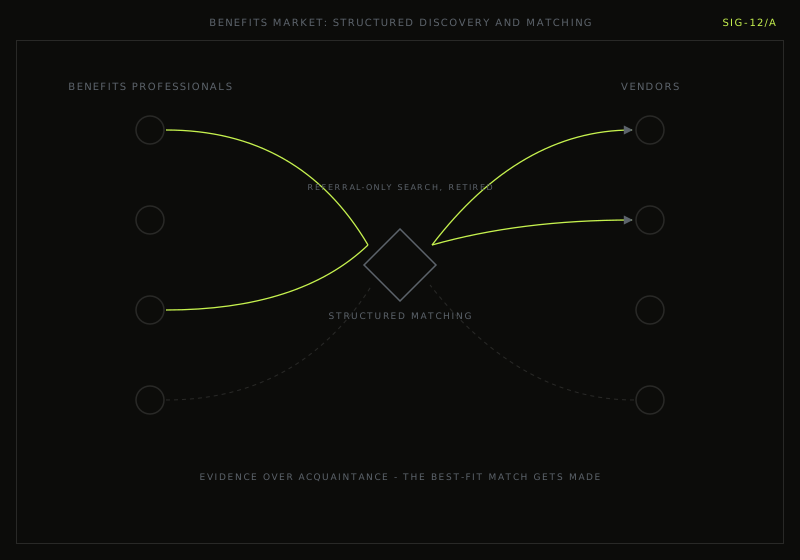
Benefits professionals find vendors by referral and cold outreach; vendors pitch blind. A market this specialised ran on who you happened to know — discovery by conference booth, selection by familiarity, and the best-fit match often never made.
How we made it better
We built the marketplace connecting the two sides: benefits professionals discover and compare world-class vendors on structured ground; vendors reach exactly the professionals their offer fits. Structured discovery and matching replace cold outreach — the pitch arrives where it belongs, and both sides decide from evidence rather than acquaintance.
Where it stands
- Platform live, connecting professionals and vendors
- Structured discovery replacing referral-only search
- Both sides of the market deciding on evidence